




Finland Elementary School Enhances the Learning Experience with Symetrix
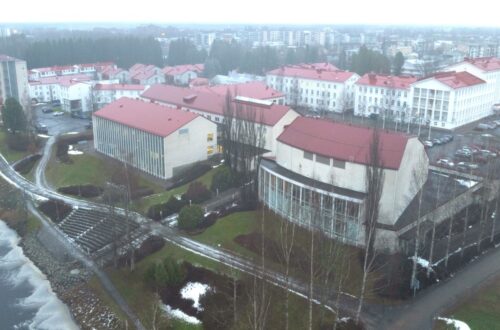
Kärki School is a new elementary school in Seinäjoki, Finland that began operations in January 2025. This presented staff with a chance to evaluate what kind of AV solution they wanted to have. In the old school all the audio visual systems were analog and now they had an opportunity in the new school to do new kinds of things resulting in a modern high quality AV system.
They visited a local trade school as a reference site to see what they had done. System integrator Luova Tehdas had installed a system there and staff saw the results. Staff were deeply involved in the planning process with the professionals at Luova Tehdas asking them what was wanted and needed. Together they found the easiest possible ways to control the audio and video for use in everyday school life. Luova Tehdas did all the programming and testing with the products and system before it was deployed.
Creating the right type of control interface was a critical part of the system development. Luova Tehdas met with staff to gather input on what would serve users by making it simple for everyone to easily understand. A plan was put together for the system operation and what the touch screen interface would look like. By involving the users in the design, Luova Tehdas gave them just what they needed. An interface layout was designed to include the desired buttons for control of different features with the various components which would be displayed on Symetrix T-10 touchscreen controllers.
The system provides staff with the ability to manage situations where they have to make changes quickly such as bringing in microphones to the auditorium or playing music from the gymnasium. They can just press a few buttons to bring the system in-line for changing conditions.
Antti Kivekäs, AV Designer and Project Manager at Luova Tehdas explains, “the main idea was to have a really simple and reliable system because there are many users and some are more experienced in AV than others. The system had to start up and operate easily without people actually even knowing what's happening in the back end”.
“As a basic user and AV manager the system is now very easy to setup and use as well as reliable,” states Teemu Kallio, a teacher at the school.
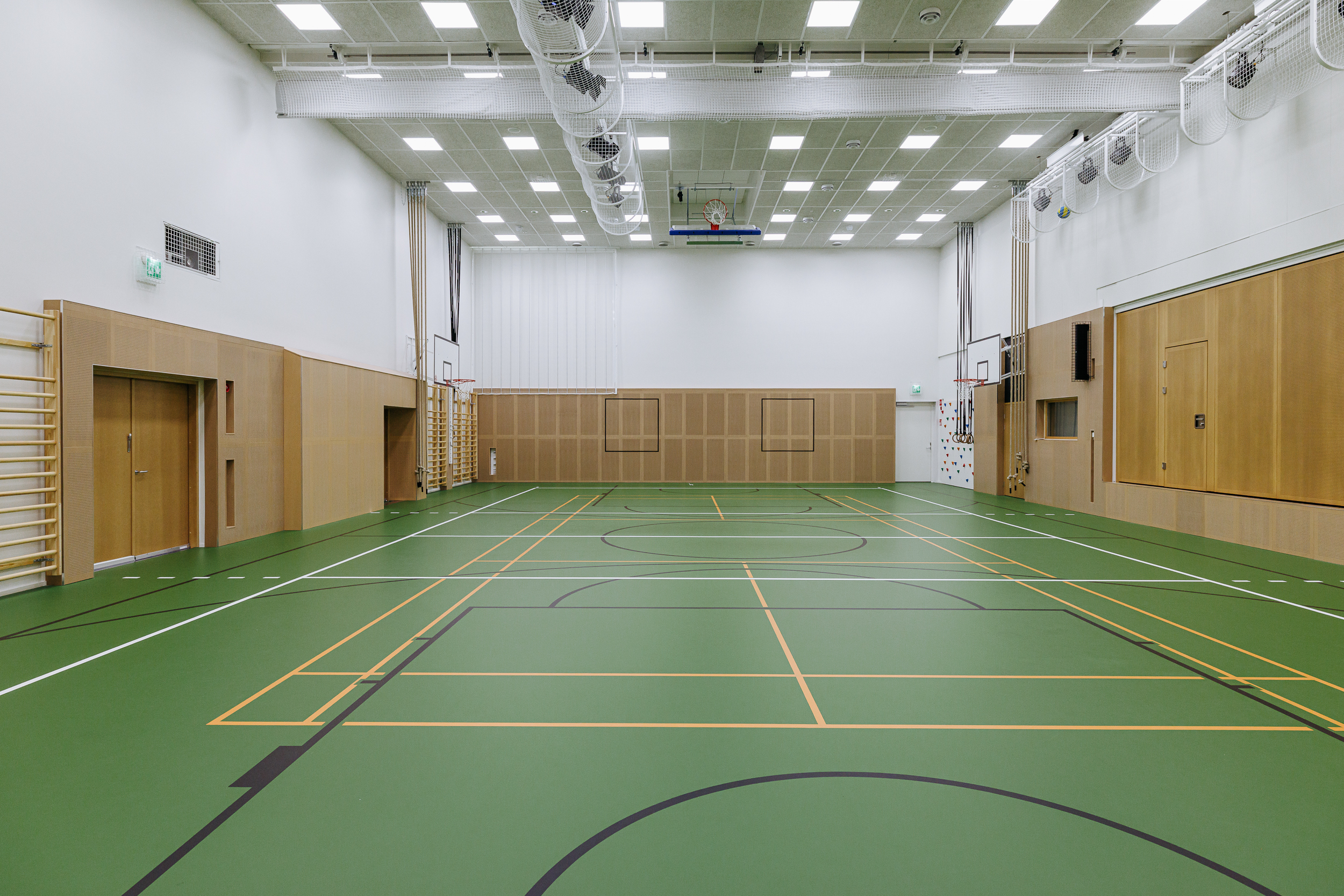
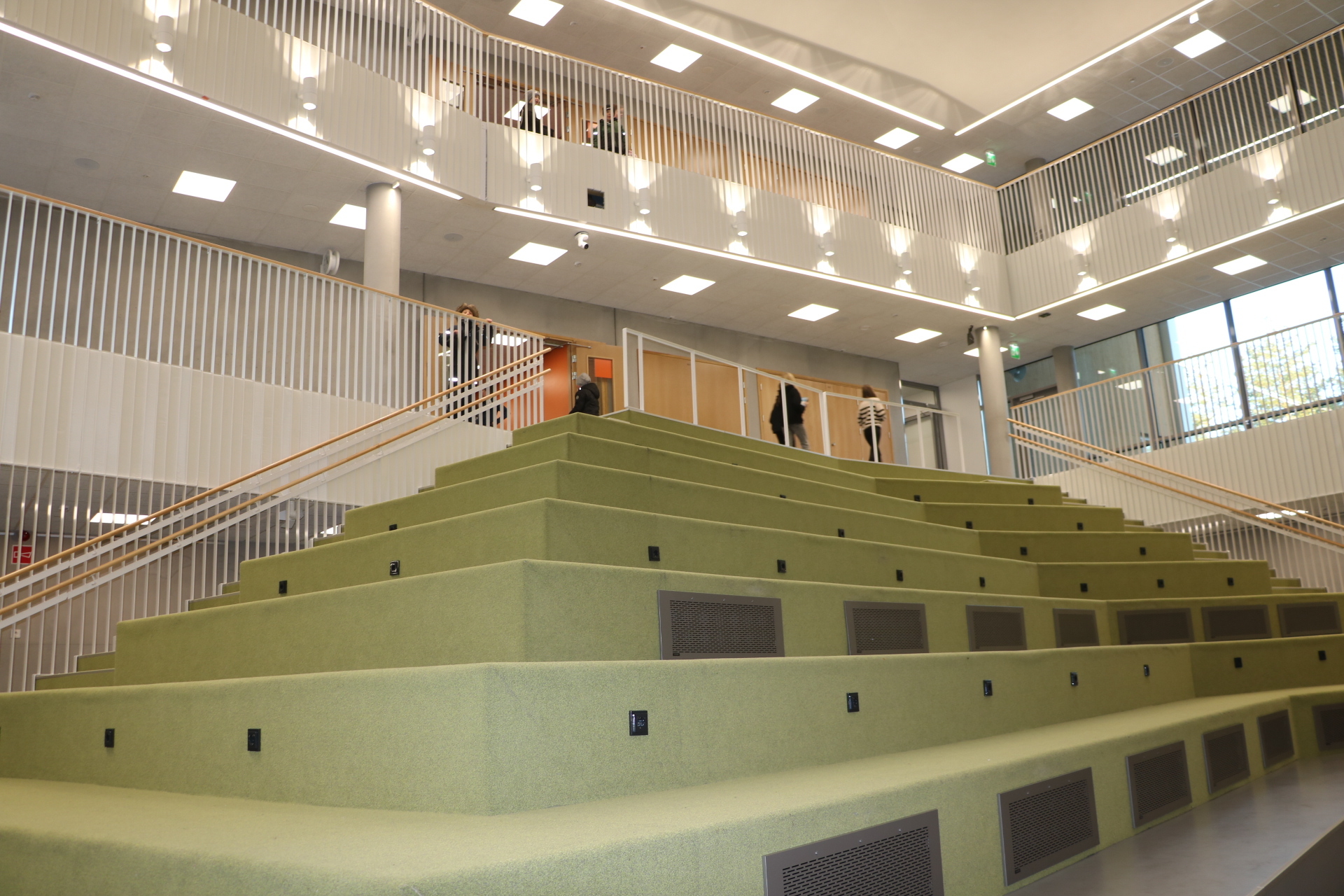
In the auditorium there is big screen and projector with wireless microphones so it's easy to set up for activities such as morning assemblies. Video and audio can be streamed to classrooms using a camera next to the projector in the auditorium. The gymnasium also has a projector and big screen. They can route vocal inputs from the gymnasium to the auditorium and the opposite as well. The spaces are used almost every day. When gathered all together there are 360 pupils and 25 teachers. There are large doors which can be opened to combine both spaces, and the system easily adapts to this as well.
In the classrooms there are large touchscreens in the front to watch and listen to a live stream from the auditorium. Teachers in the classroom can also use their own devices by mirroring smart phone or iPads to present content to the touchscreens.
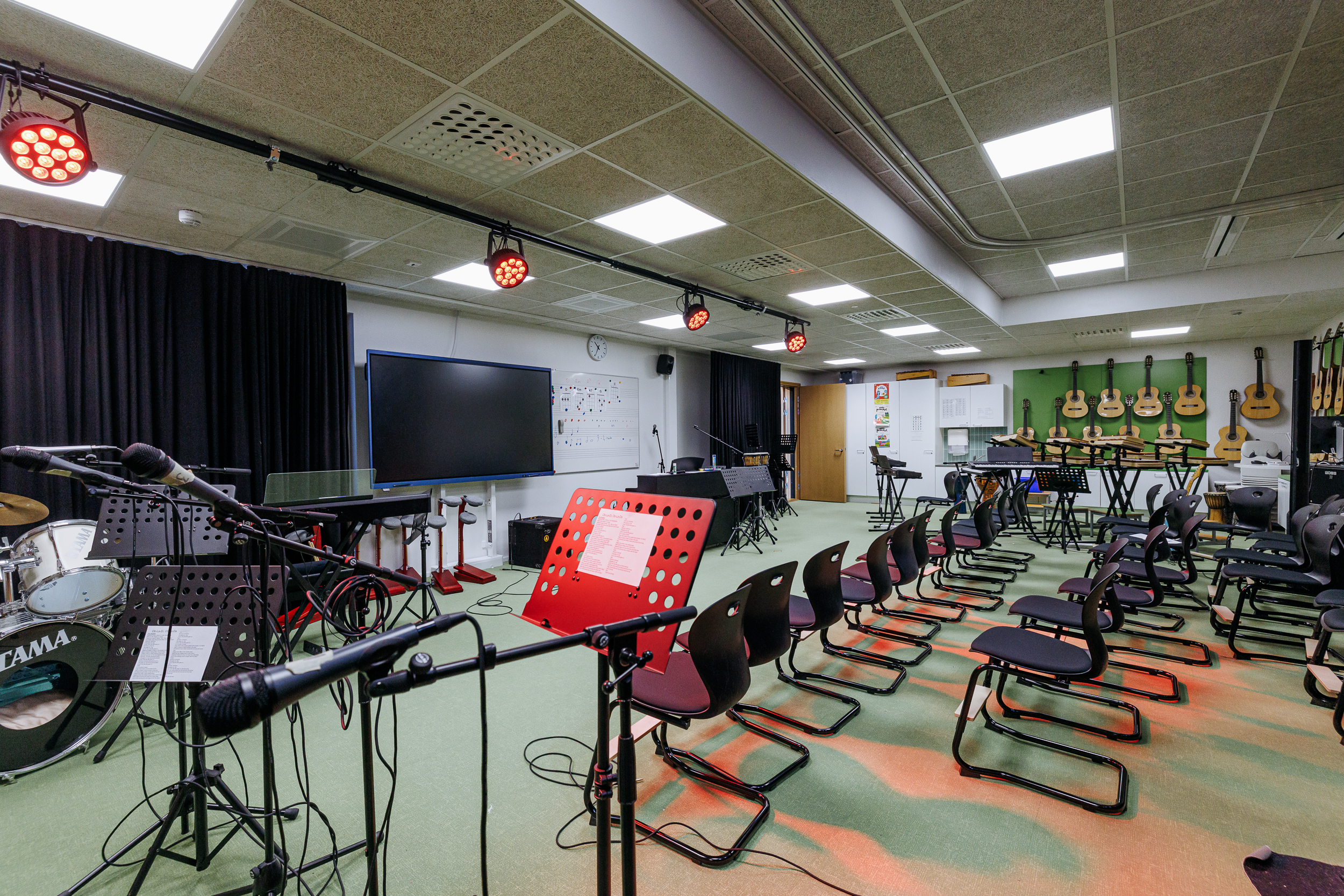
There is a large music classroom with many instruments along with an attached mixing room featuring a mixing console which is connected into the Symetrix system. There is a smaller performance room where a few students can play something and be recorded with the mixing room. Recording can be combined from the smaller and larger music rooms and be mixed together. The large music room can be arranged with a stage by opening large doors complete with lighting control as part of the system.
There are also lights in the ceiling of the gym in the front and back with control through a light mixer to create different kinds of atmospheres depending on what kinds of activities are taking place.
The two Symetrix Prism signal processors, one for the auditorium and one for the gymnasium work seamlessly together, and tie everything together by routing audio and providing control for projectors, screens, cameras, lights, microphones into one simple solution. Users just have to press a button and everything across the network connects into the system. Prism processes audio to the speakers with adjustment for EQ, compression and more to get the sound right for the spaces and handles all the audio routing between the different types of mixers and modules. They offer the expandability for more classrooms or system changes without running out of I/O or processing power.
There is control of Kramer KDS series AVoIP channel switching to choose what sources are being viewed. There are Bose amplifiers and audio routing to Bose Dante speakers. Screens are controlled via a Visual Productions ioCore2 interface device. Lighting is controlled in different modes such as dimming the lights to a certain level when using the Panasonic gymnasium projector to view the picture better. Other audio components include Sennheiser wireless microphones and an Allen & Heath SQ-5 Digital Mixer used for music performances. Control is programmed and managed with a combination of Symetrix Intelligent Modules and Symetrix Composer software.
There is a wireless option for transferring images and video to the screens so a smart phone or tablet can be connected as a media source.
With the Symetrix Bluetooth endpoints music can be played from a smartphone, tablet, or computer which is used for purposes such as background music in the gymnasium for people who are there training. As Bluetooth endpoints are Dante enabled devices they can be placed anywhere and the audio routed over the network.
There are 2 touchscreen control panels on the walls in the auditorium and gymnasium and another integrated into a movable podium. iPads can also be used as wireless devices with the same controls presented there.
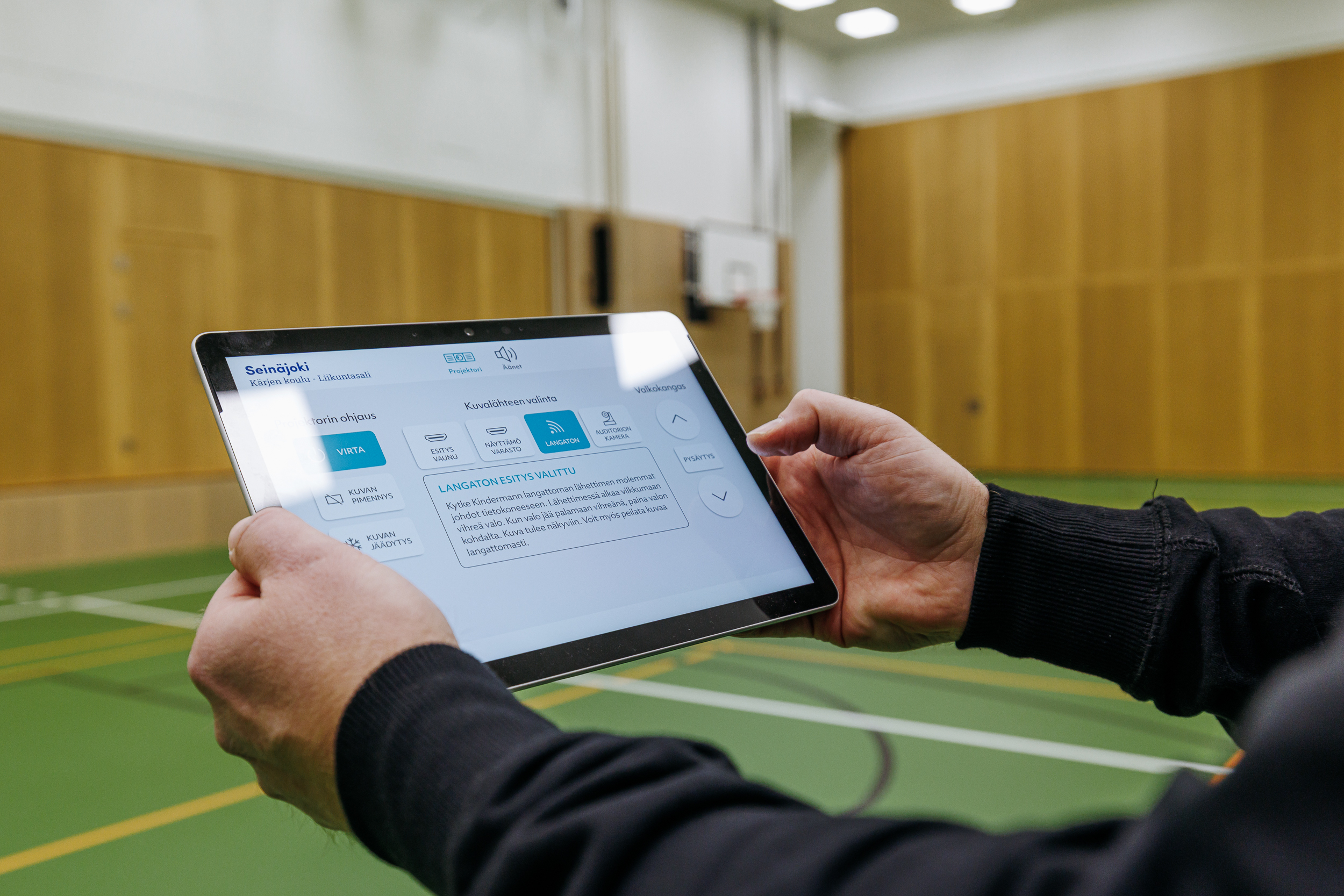
The touchscreen interfaces all work the same way. They are interconnected for use when the spaces are used together. When performing an operation on one screen, it is reflected on the others as well. From the interface users can adjust sound levels, turn on projectors, lower and raise screens, and select audio and video source routing.
Teemu would like to further explore recording with the system to use with events like festivals to record everything and edit afterwards to produce content that could be distributed.
The feedback from users has been very good and they have been very happy with the system as they say that it's very easy to use and everybody can use it,” confirms Matti Hankkio, AV Specialist at Luova Tehdas.
“The system is easy to modify to serve the needs of the school as it is now a digital world with AVoIP they can have anything they want everywhere they want,” affirms Antti.
Teemu reports “everybody has been very excited as this is something they or I have never seen. There have been visitors from other schools from other towns to see how this has been done and everybody has been very excited and fascinated about the possibilities”.