










-
Type
- Dante
- Networking
- Control
-
System Management
- Composer Management Software
- SymVue Screen Authoring
- AV-Ops Center Remote Monitoring
- ARC-WEB Control Interface Signal Processing
- D100 AVoIP DSP Server
- Radius NX AVoIP DSP
- Prism AVoIP DSP
- Edge AVoIP DSP
- DSP I/O Expansion Cards
- Jupiter DSP
- Zone Mix 761 DSP I/O Connectivity
- xIO Bluetooth Endpoints
- xIO XLR Endpoints
- xIO AVoIP DSP Audio Expanders Control Systems
- T-Series Touchscreen Controllers
- W-Series Controllers
- Control Server for Personal Devices
- xControl GPIO Expander
- ARC-Series Controllers
Sound Masking with Composer
Sound masking is the addition of natural or artificial sound (such as pink noise) into an environment to cover up unwanted sound by using auditory masking. Sound masking reduces or eliminates awareness of pre-existing sounds in a given area and can make a work environment more comfortable, while creating speech privacy so workers can better concentrate and be more productive. Sound masking can also be used in the outdoors to restore a more natural ambient environment.
All the technical details and peculiarities of sound masking can be quite involved, and much has already been written on this subject. A recorded Symetrix Master Class on Sound Masking is archived on the Symetrix website here: http://symetrix.na6.acrobat.com/p96442215/
The Sound Masking Master Class covers many topics such as when sound masking should be used, the research behind sound masking and frequencies used, as well as many topics related to successful sound masking systems such as acoustical treatment, sound masking speaker placement, human speech levels, etc. This tech tip will provide a quick programming reference for how to set up sound masking within Composer hardware.
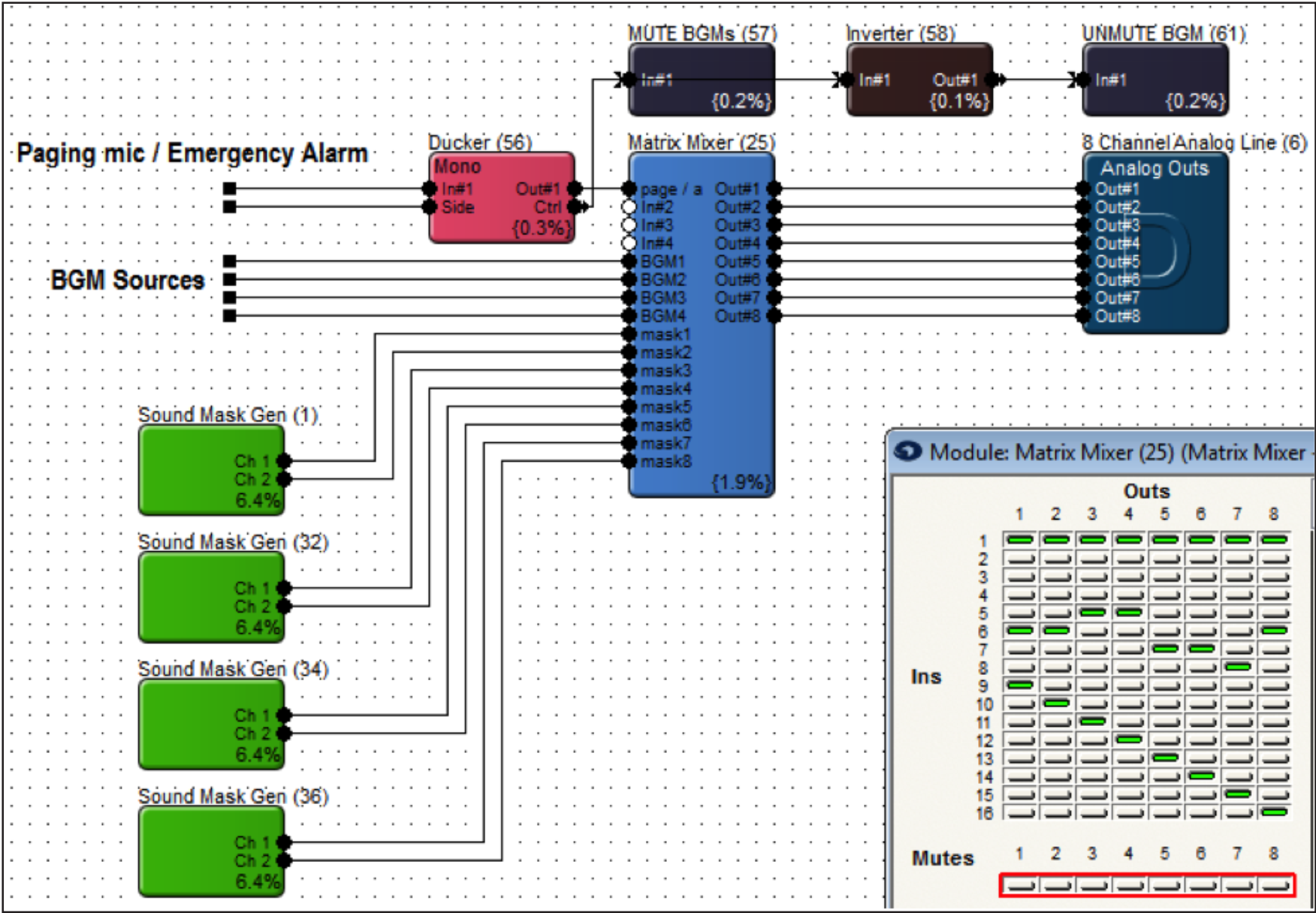
Sample signal path that could be used for a sound masking application
The basics of a sound masking system is that uncorrelated noise, such as the output of two distinct pink noise generators, is alternated between zones. Using uncorrelated noise ensures that the pink noise used for sound masking, will not comb filter at the intersection between zones.
In the above signal path, multiple two channel Sound Mask Gen super modules are used. Each Super-module uses two distinct pink noise generators, as such Ch 1 and Ch 2 could be alternated between adjacent zones to avoid comb filtering; however, because each DSP has a ton of DSP horse power to spare, multiple modules were used so all noise is uncorrected across all zones.
The paging mic/emergency alarm signal, as well as BGM sources, are used as placeholders to show how a sound masking system may interface or run in conjunction with additional audio sources. The ducker Ctrl output is set so that when an emergency page or alarm is triggered, the BGM and sound masking sources can be muted to insure optimal intelligibility during a page or emergency alarm.
The Sound Mask Gen may be found in the Super-Module library, or can be acquired from Symetrix tech support. That being said, the Super-module is fairly simple to create and setup. The Sound Mask Gen consists of a pair of pink noise generators for uncorrelated pink noise on channel 1 and channel 2, a 31 band graphic EQ , high pass filter, low pass filter, and a gain module.
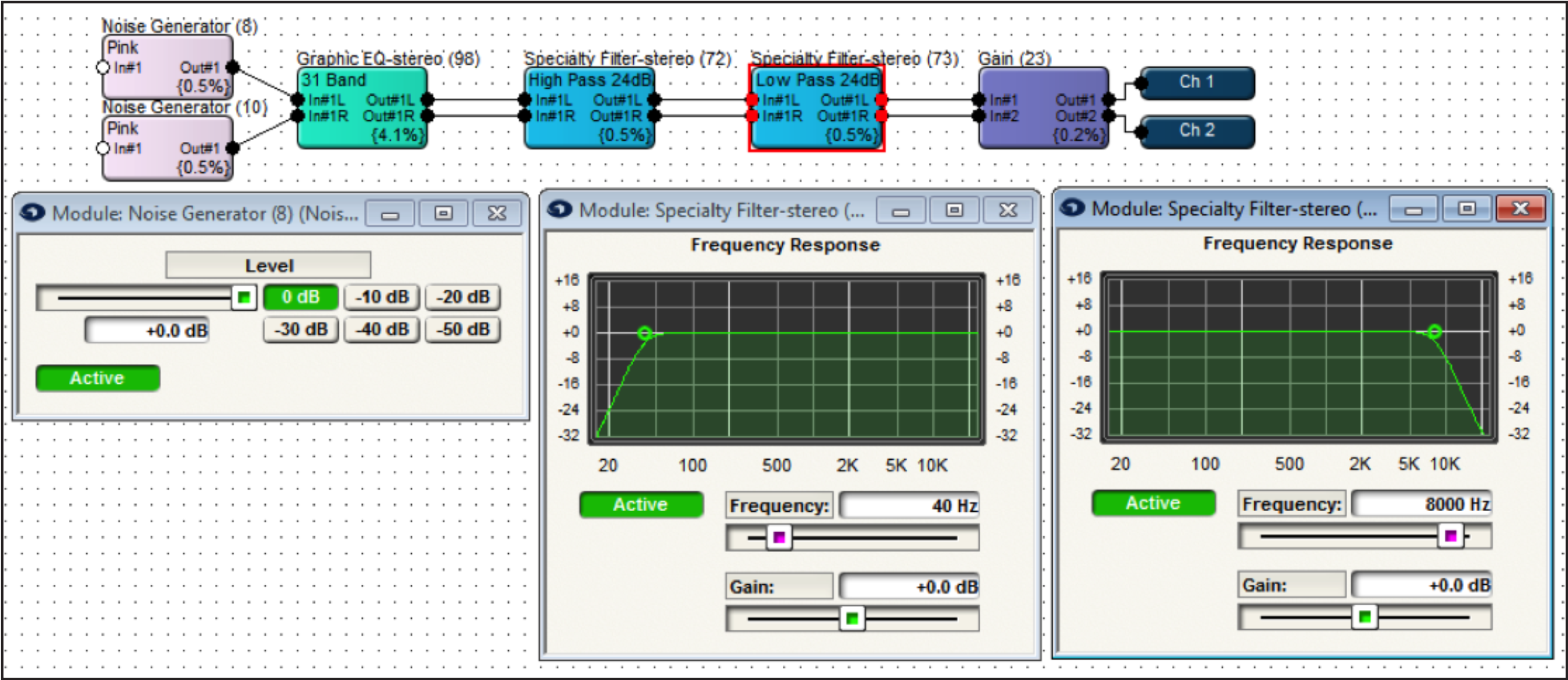
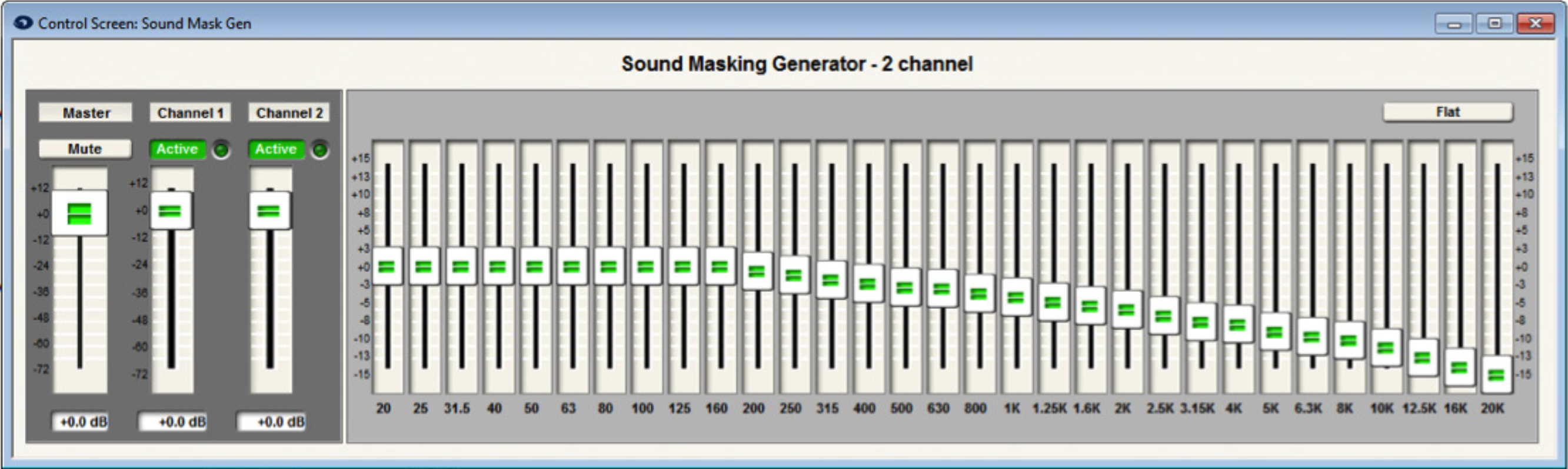
The High Pass and Low Pass are both 24dB/octave with their respective settings as 40Hz and 8000Hz. The 31 Band Graphic EQ is set as follows:
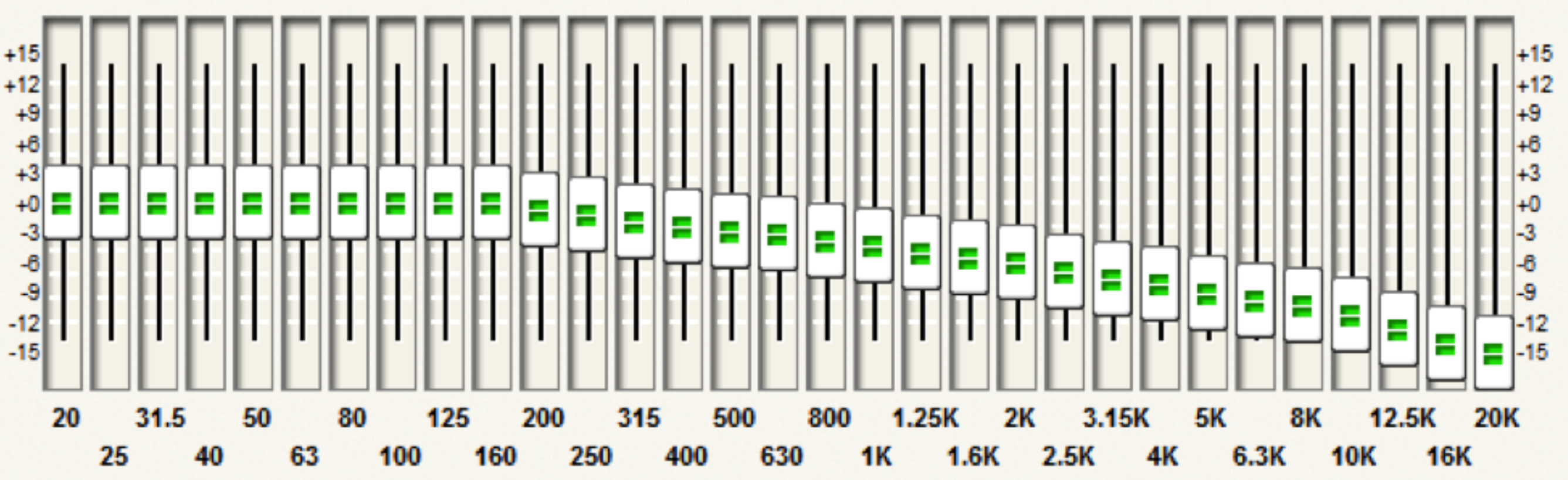
The 31 Band Graphic EQ settings shown above are a great starting point for reaching target levels of masking noise in a given environment, although changes may be needed when tuning the system with a real time analyzer. The two types of environments that may require sound masking are “open offices” and “closed offices”. Many measurements in actual offices by Atlas Sound and acoustical consultants have converged on a recommended spectrum that balances the need for speech privacy with occupant acceptance. Achieving these target levels require the use of real time analyzers.

Open Offices:
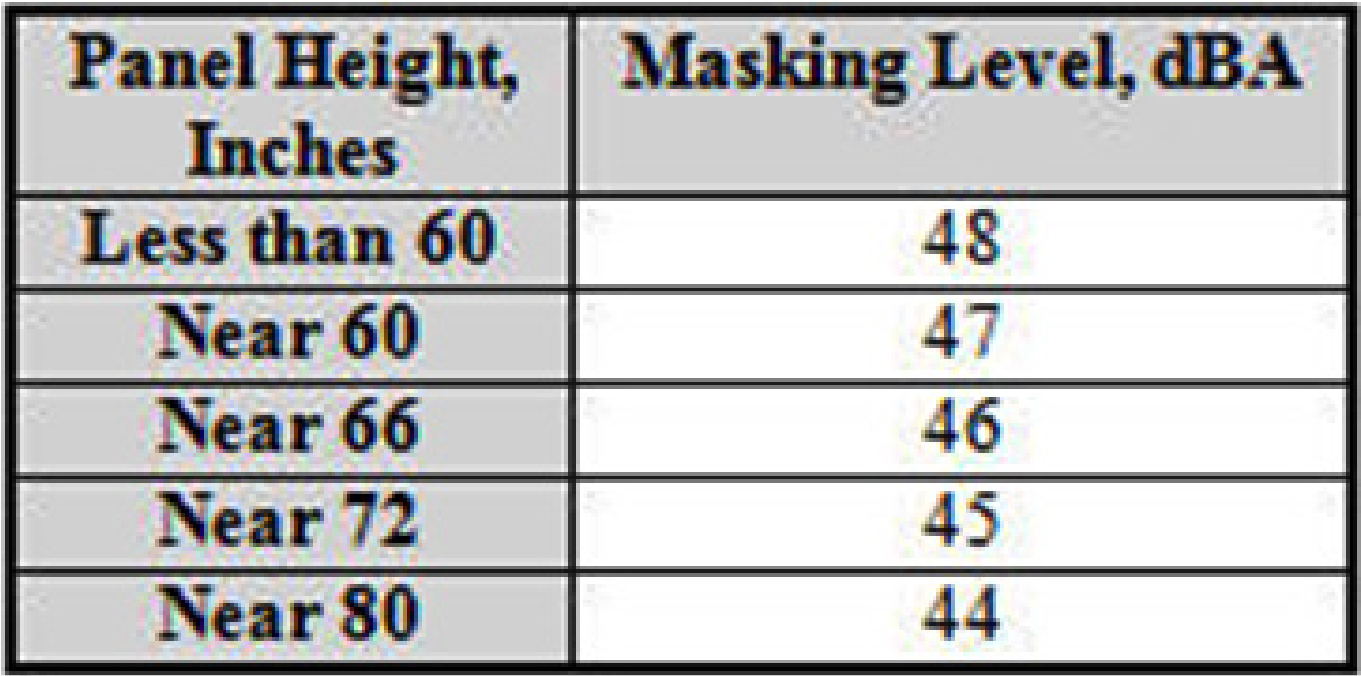
Open offices can be designed in a wide variety of shapes, sizes, and contain different furniture systems. However, divider panel height is the single most important feature that improves speech privacy. The lower the panel height, the higher the sound masking level needs to be in order to provide acceptable privacy between occupants.
Closed Offices:
When most persons in closed offices require privacy, they simply close the door. However, in most modern offices there are still several paths of sound from one office to another, any of which can carry intelligible speech. These paths include return air paths above continuous ceiling plenum, HVAC piping
and air grille common between adjacent offices, or even insufficient sound isolation through the walls themselves, especially when demountable air walls are used.
The spectrum given below is that recommended for closed offices. The overall A-Weighted level for that graph is 44 dB(A). The actual level can be adjusted between 42 dB(A) and 46 dB(A), the lower level being for more heavily constructed offices and the higher level being for under-floor masking or offices with more than one path for leaked sound.

In the example signal path, all super-module controls have been copied to a super-module control screen and resized for easy access to all sound masking parameters when tuning the system.
If you would like a copy of the Sound Mask Gen super-module, check the super-module library in Composer.