










5 Questions with Marco Itta: From the Recording Studio to the Future of AVC
How a career spanning music, live production, systems integration and application engineering shaped his approach to modern AV.
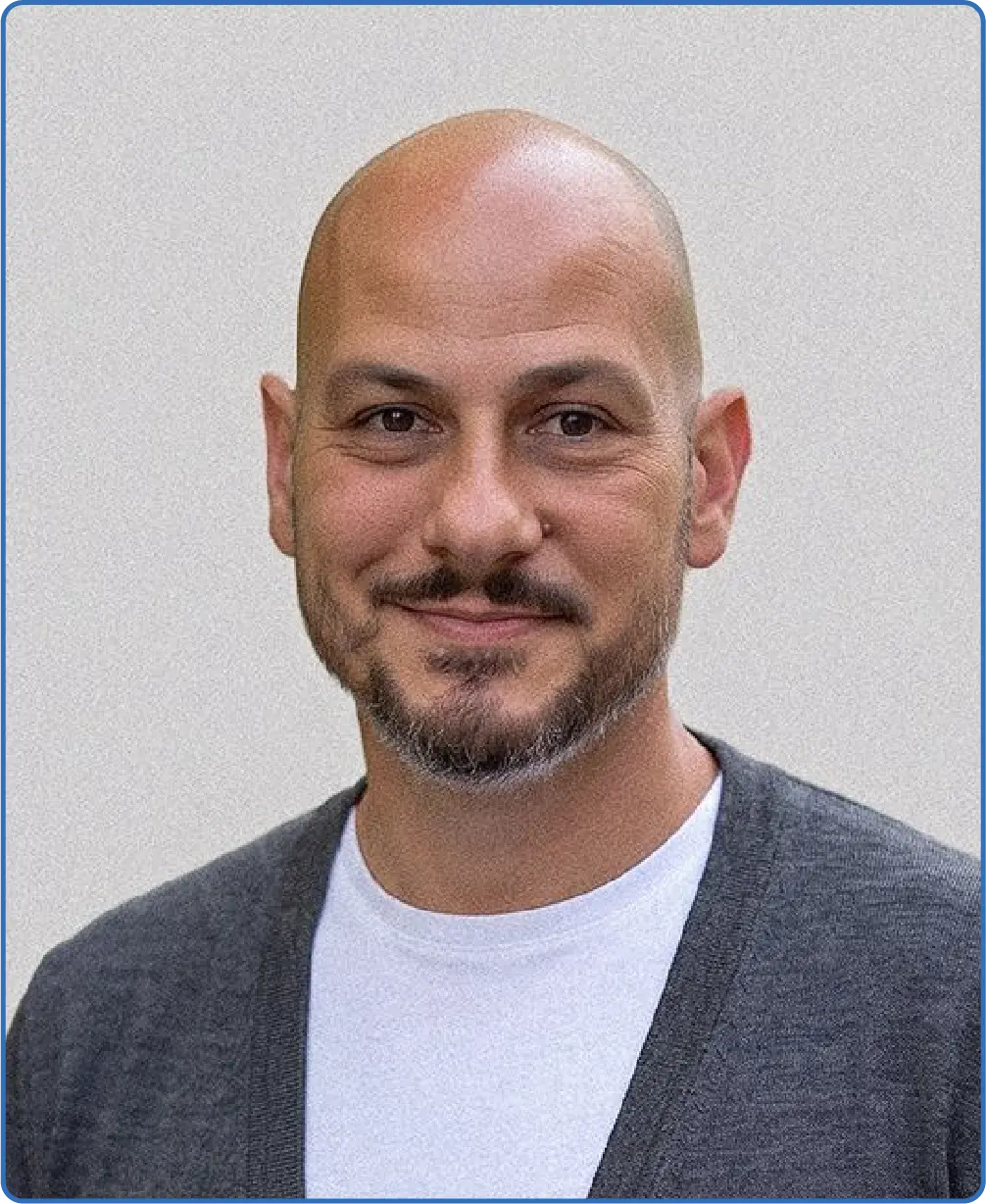
Name: Marco Itta
Title: Head of Business Development, EMEA & India
Years at Symetrix: Since October 2023
Marco Itta’s career has taken him from recording classical and jazz musicians to designing installed systems, supporting integrators in the field, and helping grow Symetrix across EMEA and India. In this edition of 5 Questions, he shares why strong AV begins with understanding the outcome, how good design reduces risk at commissioning, and why professional craft remains essential even as technology becomes more capable.
You’ve worked across recording and live sound, systems integration, application engineering, and now business development. How has that range of experience shaped the way you think about AV technology today?
My first ten years were spent in music, primarily as a recording engineer specializing in classical and jazz — first in Italy, then in the UK, and finally in the US. Live work was part of the package: when artists I recorded with went on tour, I often went with them. In the studio, especially with acoustic music, your real job is to get inside the musician's head. A musician or an ensemble has lived with that sound every day for twenty or thirty years, and when they listen back to the record, they want to hear it exactly the way they know it…or sometimes better. Live pulls you in the opposite direction: fixed spaces, real audiences, no second take.
Installed AV, where I went next, turned out to be different from both. What changed most was the timeline: an installed system is never finished. It goes on living for ten years, operated by people you will never meet. Then came Symetrix. As a field applications engineer, which was genuinely fun, overnight I found myself on the other side of the phone. Suddenly some of the best system integrators in Europe were calling me expecting an answer immediately, exactly what I used to demand of myself, from the other chair.
Business development closes the circle: customers are not looking for a technical solution, they are looking for an outcome. And in AV right now there is still a great deal left to invent, with Symetrix right in the middle of it.
Before joining Symetrix, you built a reputation as an audio engineer working on high-profile orchestral, broadcast, and live events. What lessons from that period still influence how you approach installed AV systems?
Design first. I have spent much of my career matching microphones to preamps and processing, and loudspeakers to rooms and to the type of application, and the conclusion is always the same: every space is different, and there is no single solution that fits all of them. You have to arrive at commissioning already knowing what you are going to hear. Tuning confirms the design, it does not rescue it.
The other lesson is that the room is part of the signal chain. It is not the container you put the system into, it is a component with its own response, except it is the one component you cannot swap out, and it is usually handed to you already built. In the studio you choose the best control room or the best recording space for the job. In AV systems you rarely have that luxury, so the design has to absorb the room you are given.
As someone who has been both an integrator and a manufacturer-side technical expert, what advice would you give to AV professionals evaluating new platforms or technologies?
We all want the quick, easy solution. I asked manufacturers for exactly that when I was on the other side, and integrators ask us for it now. But quality still takes work. It does not arrive on its own, and a platform that promises otherwise is usually hiding the effort somewhere you will find it later. The part that gets overlooked is that a product's success still depends on the person installing and configuring it.
Customers increasingly look for systems that do everything on their own, but what turns a good platform into a working one is craft on both sides: the craft that goes into building the product, and the craft of the system integrator who deploys it. Neither of those appears anywhere on a price list. So the right question to ask is not how much the technology does by itself. It is whether the technology lets you get where you intended to go, to the goal you set for the project.
What is one common AV design or deployment mistake you wish more people would avoid?
Choosing the product before understanding the problem. A platform gets selected early, often before the scope of work is properly defined, and then the design has to be bent to fit it, so the system ends up either oversized or undersized and struggling from day one. That mistake does not stay contained: commissioning gets squeezed into whatever time is left and the system is tuned in a hurry on the final day. Commissioning is where a design is verified, not where it is invented.
The other one is the network. Everything in AV runs over the network now, but the network is still assumed rather than agreed. People take it for granted that IT will provide what the system needs, and that conversation happens far too late.
What excites you most about helping Symetrix grow its presence across EMEA? What keeps you excited about working in pro AV right now?
AV keeps expanding, and that is what makes it interesting. I come from pure audio, and today audio, video, control and networking have stopped being separate disciplines; they are one conversation. For someone with my background, that is fascinating, because the questions are bigger than they used to be.
EMEA is a single label covering an enormous amount of variety. On paper it is one commercial region; in practice every market inside it has its own culture, its own language and its own way of working. And it goes further than that: the same product is read differently from one market to the next. Not better or worse, just different emphasis. You cannot approach the region with a single message and expect it to land everywhere. That is also why I am excited about where Symetrix is going: Cognio is a genuinely new approach to AVC, and it is an answer to exactly this kind of evolving landscape.
----------------------------------------------------------------
Bio: Marco Itta is the Head of Business Development for EMEA and India at Symetrix, where he began in 2023 as a field applications engineer. He came to pro AV from music, after ten years as a recording engineer across Italy, the UK and the US, followed by work in integrated AV system design and live technical direction. That combination of technical and commercial experience shapes how he supports partners across more than forty markets.