











AI, AV-over-IP and Distributed Architecture: InfoComm Insights with Jason DiCampello
Go Beyond the Booth: What AV Pros Should Really Be Looking for at InfoComm 2026

Name: Jason DiCampello CTS
Title: Eastern Regional Sales Manager
Years attending InfoComm: 22
How many years have you been attending InfoComm, and what do you remember most about your first show?
I’ve been attending InfoComm for over 20 years, and what stood out early on was just how fragmented everything felt with separate systems, separate workflows, and a lot of manual effort to make it all work together. Looking back, it really highlights how far we’ve come. Today, conversations are much more focused on interoperability, user experience, and scalability.
What should AV consultants, integrators, and system designers be paying closest attention to at InfoComm 2026?
This year, I’d encourage people to look beyond features and focus on how platforms support a system over time. The real shift happening in the industry is from one-off space design to scalable, software-driven environments that can be deployed, monitored, and supported across many spaces. Solutions that simplify design, reduce commissioning time, and provide better visibility into system performance over time are going to matter the most.
AI is expected to be a major theme at InfoComm 2026. What does “AI in AV” actually mean in practical terms for integrators, consultants, and end users?
AI is getting a lot of attention, but the real value today is in improving user experience and system operations, not replacing system design. Features like automated camera behavior, noise reduction, and diagnostics are already useful, and we’re getting close to AI-assisted system configuration within manufacturer platforms. The biggest impact will be in reducing complexity across design, deployment, and ongoing management. The fundamentals, however, still matter most.
What should AV professionals understand about AV-over-IP before they walk the InfoComm show floor?
If you’re walking the InfoComm floor, the most important thing to understand about AV-over-IP is that in many cases, you’re now building on someone else’s network. That changes the conversation entirely. It’s not just about bandwidth or latency; it’s about collaboration with IT, security, and long-term support. The best questions to ask are about how systems are managed, how issues are diagnosed, and what happens when something goes wrong. That’s where a lot of real-world challenges show up.
What are the benefits of designing and validating an AV system before all the hardware is physically installed?
Designing and validating a system before hardware is installed reduces the risk of issues that typically arise during commissioning. It allows teams to work through signal flow, control behavior, and system interaction upfront, instead of solving those problems on-site.
It also enables consistency at scale. Rather than rebuilding systems room by room, teams can deploy and refine a validated design, reducing commissioning time and avoiding unnecessary field adjustments. Ultimately, it shifts the process from reactive to intentional, resulting in more predictable deployments and better long-term performance.
What is a distributed AV architecture, and why is it becoming more important?
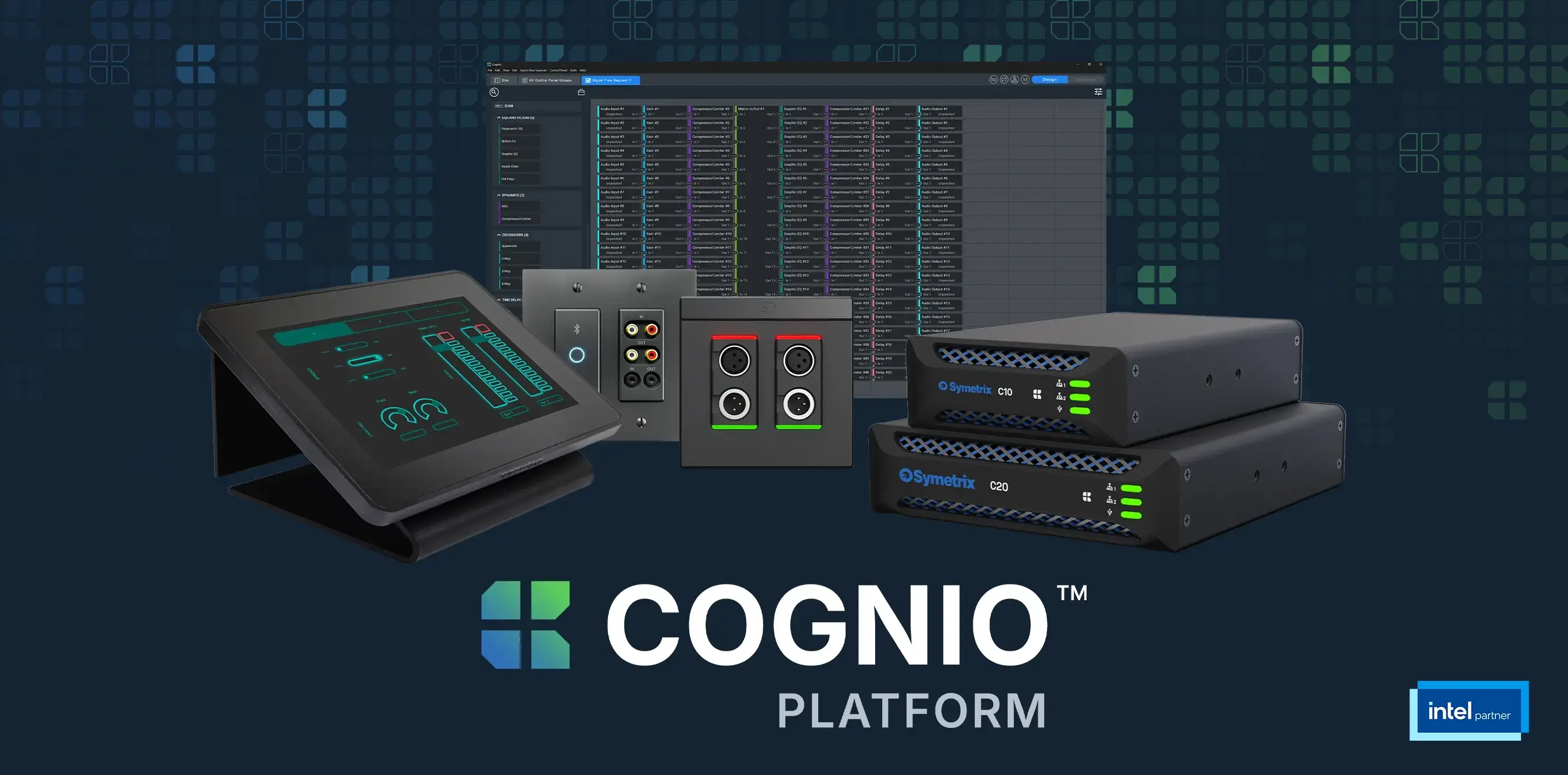
Distributed architecture isn’t just about where processing lives; it’s about designing systems that can scale and evolve without starting over. Distributed AV architecture reflects the shift from single-space systems to connected, scalable environments. Instead of centralized processing, intelligence is distributed across the system, which gives you more flexibility, makes it easier to scale, and improves resiliency. This changes the design approach from building complete systems to creating modular building blocks that can expand over time. Processing, control, and redundancy can be deployed where they’re needed, without redesigning the entire system. It also aligns with the move toward software-driven platforms like Cognio, where systems are less tied to hardware and easier to scale, manage, and adapt over time.
Why does audio quality still matter so much in modern AV environments, even as video, AI, and collaboration tools get more attention?
Audio remains the foundation of every successful AV experience, even if it doesn’t always receive the same attention as video or AI. When audio isn’t right, nothing else matters. Most of the issues I still see come down to fundamentals: poor gain structure, improper microphone placement, or systems that aren’t tuned for the room they’re in. Technology has improved a lot, but physics hasn’t changed. You still have to design and tune for the space if you want clear, natural communication.
What is one common AV design or deployment mistake you wish more people would avoid?
One of the biggest mistakes I see is designing systems for installation instead of operation. It’s relatively easy to get a room working, but much harder to keep it working consistently at scale. The systems that succeed are the ones designed from day one with monitoring, diagnostics, and long-term support in mind.
For attendees seeing Cognio at InfoComm, what should they focus on during a demo?
When people see Cognio at InfoComm, I’d encourage them to focus less on individual features and more on the overall workflow. What stands out is how it simplifies the process from design to deployment to operation while still giving you the flexibility you need. It’s about reducing friction for integrators and making systems easier to manage over time, which is where a lot of projects struggle today. It also reduces the need to rip and replace systems as needs evolve, which is where a lot of long-term cost and frustration usually come from.
What do you think the next generation of AV platforms needs to deliver that older system architectures were not designed to handle?
The future of AV platforms is software-defined, where the system isn’t limited by the hardware it shipped with. The next generation of AV platforms needs to move beyond purpose-built hardware and toward more flexible, software-driven systems built on general-purpose processing. Traditional architectures were often limited by the chipset they were designed around, which meant they could only do what they were originally built to do. That’s changing with platforms like Cognio, where functionality is driven more by software than hardware. This allows systems to adapt over time, supporting new workflows, scaling across environments, and improving without requiring a full hardware refresh.
The result is a more flexible, scalable approach to AV, one that reduces complexity for integrators and gives customers a platform they can grow with, rather than replace.
Connect with Jason on LinkedIn | Meet with Symetrix at InfoComm 2026