







Monash University Reimagines Active Learning with Symetrix Cognio™ Platform
How the forward-thinking university piloted the first-ever use of Cognio’s distributed AV ecosystem to create scalable, future-ready learning environments
Modern universities are rethinking what effective learning environments should look like. The traditional lecture model is giving way to more collaborative, flexible, and technology-enabled approaches that prioritize engagement, participation, and real-time interaction.
At Monash University in Australia, that shift is already well underway.
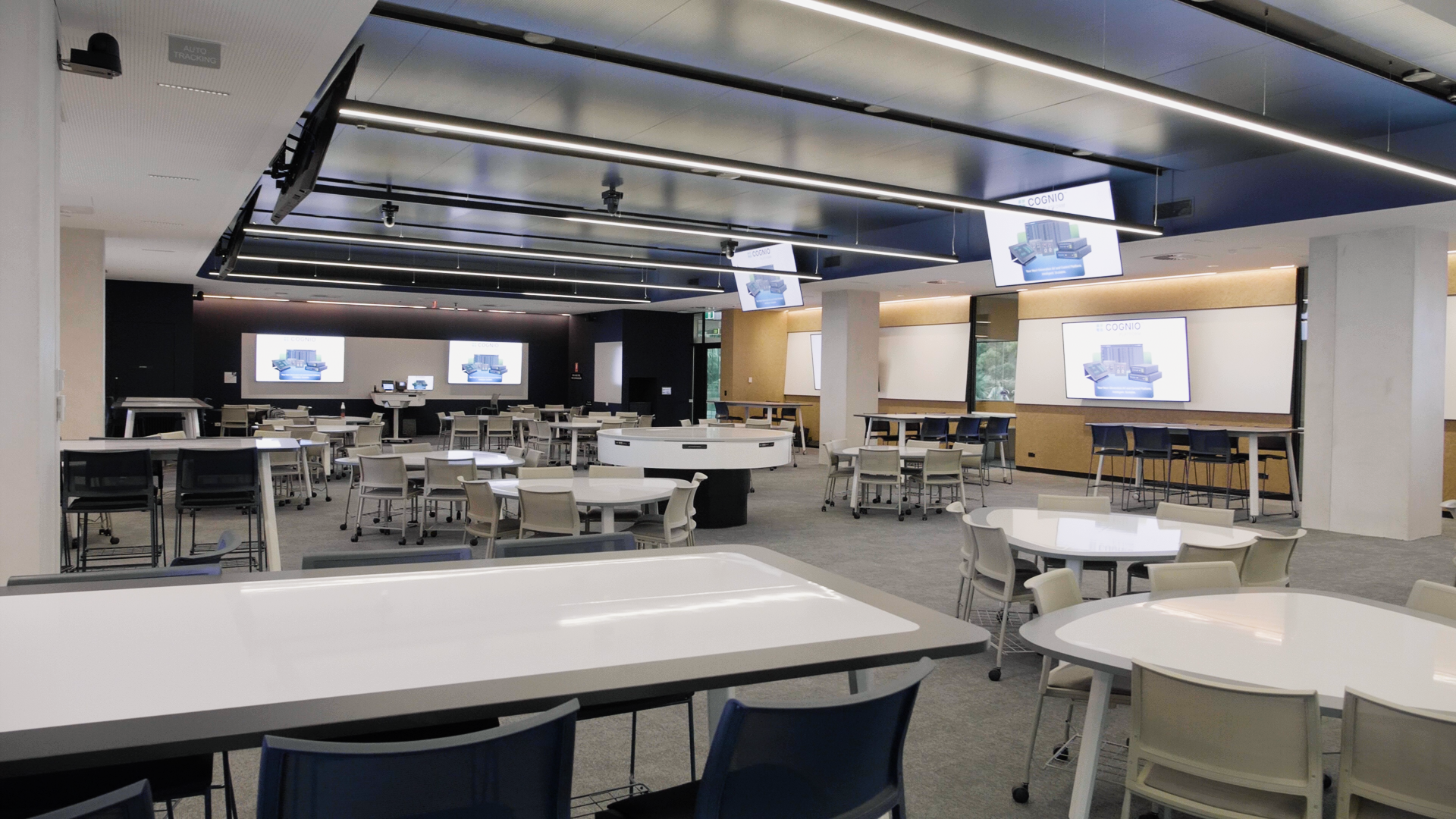
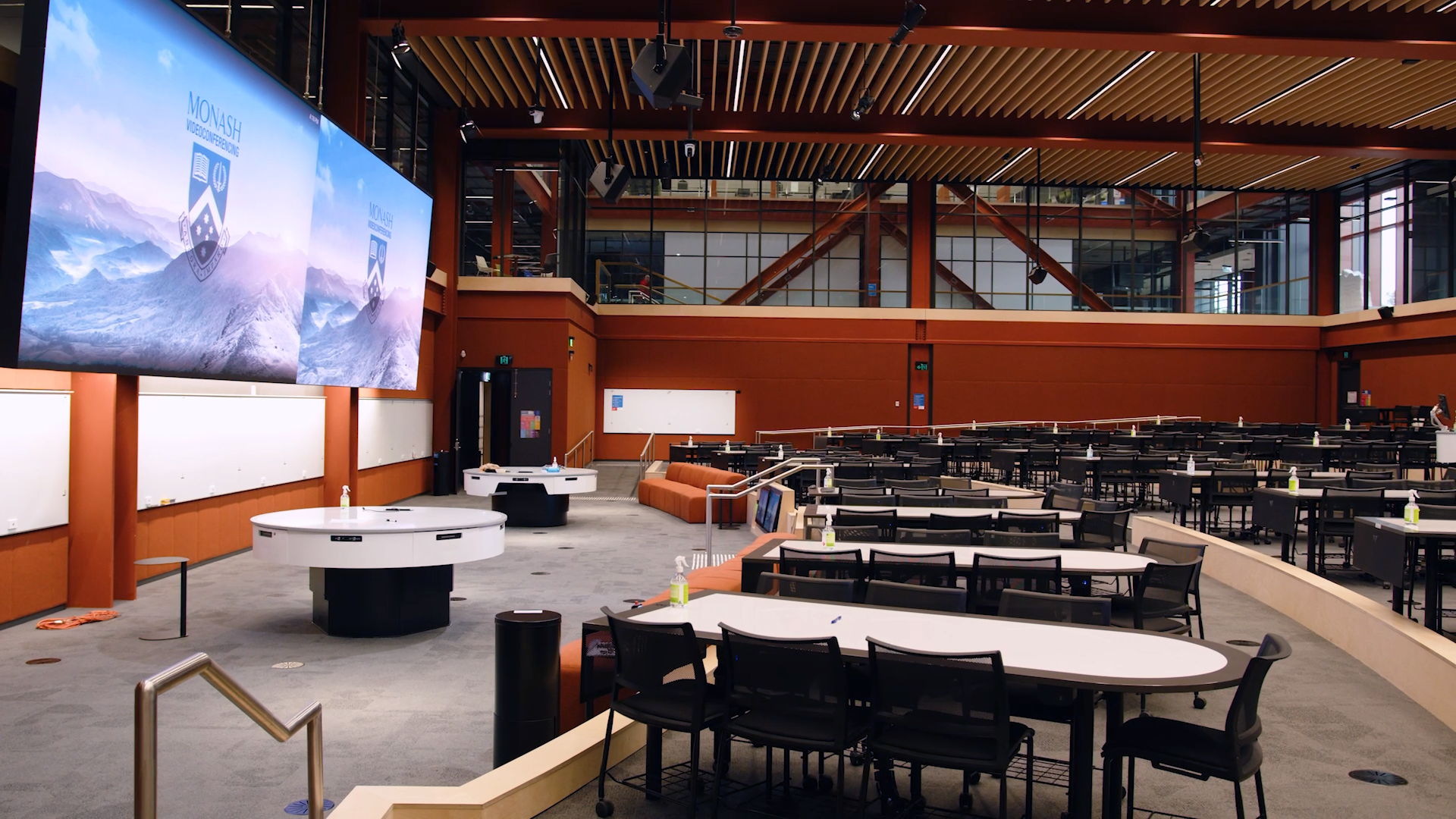
As one of Australia’s largest and most globally recognized universities, Monash has embraced Active Learning as a core part of its educational philosophy. As such, the institution’s learning environments are designed to encourage collaboration, discussion, participation, and interaction, creating spaces where technology supports the learning experience instead of distracting from it. It’s a far cry from the traditional seminar model in which students are talked at for an hour, with little opportunity to demonstrate their learning.
That approach created new demands on the AV infrastructure powering classrooms and teaching spaces across the Victoria-based multi-campus school. To support these evolving requirements, Monash partnered with Australia-based distributor PAVT and Symetrix to identify the right solution for their needs, one that would support an ever-evolving learning environment for years to come.
Symetrix and PAVT discovered that Monash University was the ideal setting for the first-ever deployment of Cognio, Symetrix’s next-generation distributed AV and control ecosystem. Together, they designed and implemented a future-focused AV infrastructure featuring distributed intelligence, enabling Monash to create scalable, flexible learning environments that evolve over time without introducing unnecessary complexity or operational risk.
Designing Learning Spaces Around Human Interaction
For Peter MacLean, Audiovisual Design Manager and Lead Audiovisual Architect at Monash University, the conversation begins with the practice of teaching, not technology.
“Our learning environments are designed to encourage interaction, collaboration, and participation,” said MacLean. “Technology should support that experience naturally and consistently, not become a barrier to it.”
That philosophy is central to Monash’s Active Learning philosophy, which prioritizes flexible teaching methods, group engagement, and dynamic classroom interaction over passive content delivery. Rather than designing spaces solely for one-way learning, such as lecture halls, the university focuses on creating environments that support the student experience. The approach places significant importance on the performance and reliability of classroom technology.
In these environments, audio clarity and intelligibility are critical. Students need to hear clearly regardless of where they are seated; instructors need confidence that technology will work reliably without disrupting the flow of learning; and AV systems must support diverse teaching styles without creating friction. “Faculty should be able to walk into a room and focus on teaching, not troubleshooting technology,” MacLean explained. “The AV experience needs to feel intuitive and reliable regardless of the type of space they are teaching in.”
As Monash continued evolving its learning environments, the university required an AV platform capable of supporting long-term flexibility and scalability while maintaining a consistent operational experience across spaces. PAVT, a long-standing Symetrix partner with decades of experience supporting Monash University, recognized Cognio as a strong fit for these requirements.
“PAVT has built up decades of trust with Monash University, proudly working alongside them to bring to their attention dependable technology that assists their goals and aspirations,” said Ben Clarke, Technical Support Manager, PAVT Australia & New Zealand. “That trust comes from our expertise in understanding the application of technology and industry-leading pre-sales and after-sales support, helping them build strong and repeatable standards in audio performance and deployability over the life of any particular product or application.”
It was that trust in PAVT that gave Monash the confidence not only to pilot the first use of Cognio but also to be part of the development journey.
Moving Beyond Traditional AV Architectures
Like many universities, Monash operates a wide variety of teaching environments that differ in size, function, and technical requirements. Traditional processor-centric AV architectures can create challenges in these types of deployments. As systems grow, complexity increases. Expanding rooms or adding capabilities can require redesigns, additional hardware, and more operational overhead.
“Universities manage a broad range of learning environments, but instructors still expect a consistent experience from room to room,” said MacLean. “As teaching models continue evolving, we needed an approach that could adapt alongside those changes without forcing constant redesigns.”
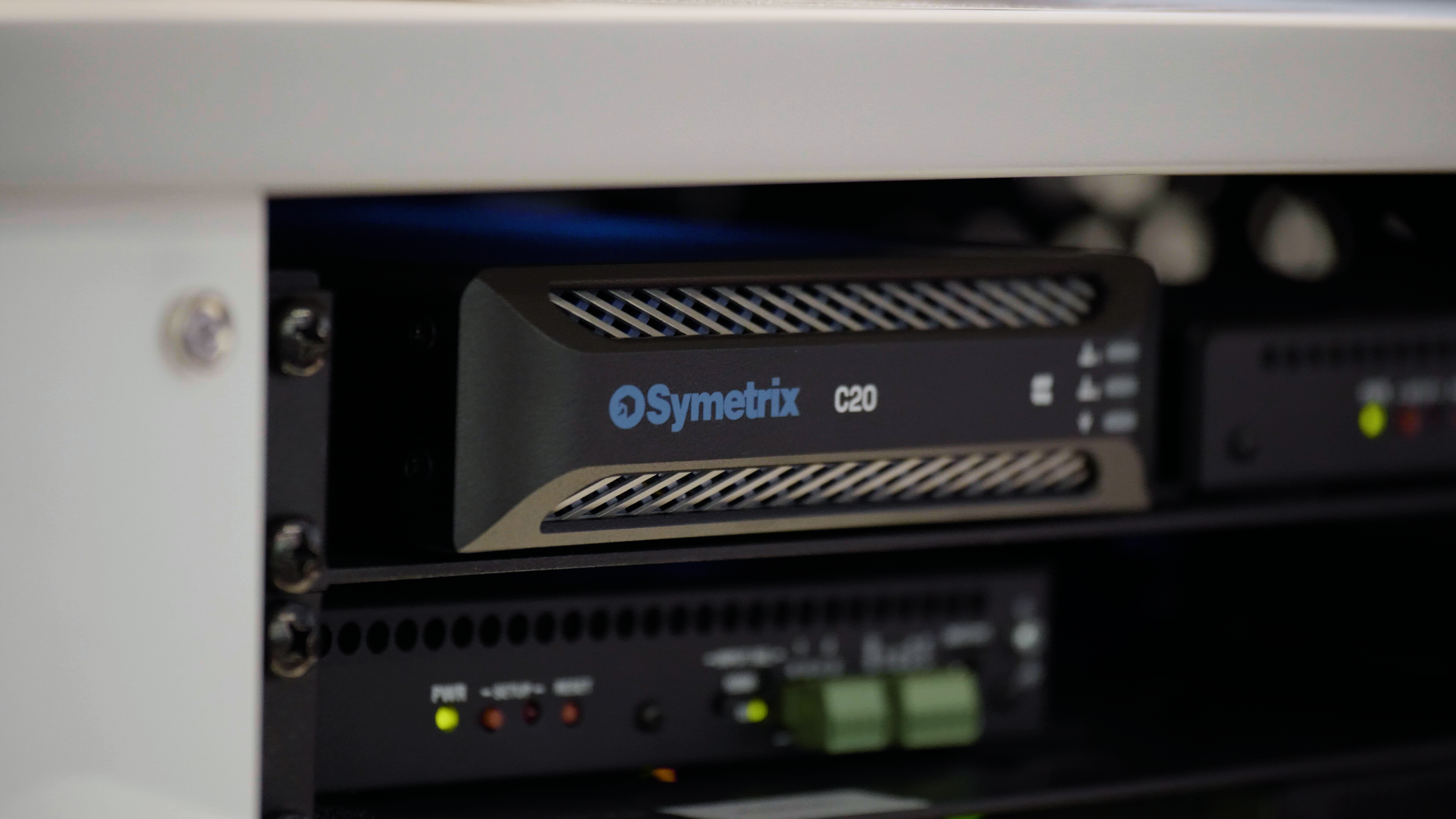
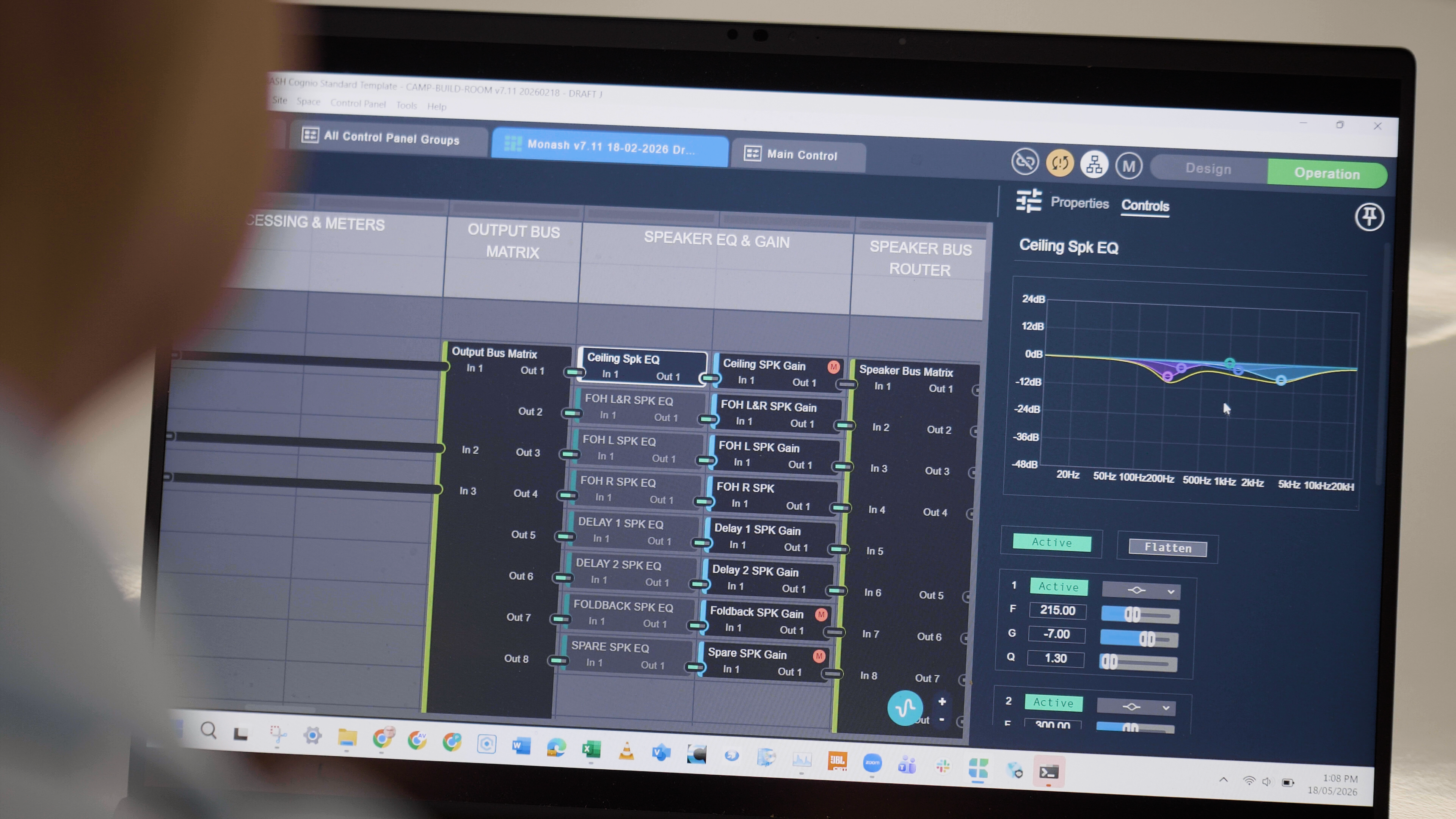
Monash and PAVT wanted a more scalable and adaptable approach that would enable them to dynamically adjust spaces as AV needs change over time. One of Cognio’s key advantages was its distributed architecture and reusable design philosophy: the same Cognio Space design, including signal flow and control screens, can be deployed across multiple hardware configurations, whether powered by a T10C, C10, C20, or larger hardware platform.
“What stood out to us was the flexibility of the architecture,” said MacLean. “We were looking for an approach that could support different room types and evolving requirements without forcing us into completely separate workflows or management models.”
This flexibility allowed Monash to standardize user experiences and operational workflows across different learning environments while reducing the need for room-specific redesigns.
Implementing a Flexible, Standardized AV Environment
To support Monash’s evolving learning environments, the deployment centered around Symetrix Cognio C20 processors alongside Cognio Spaces, Signal Flow, and Control Screen workflows. The system was designed to integrate seamlessly into Monash’s existing AV ecosystem while creating a more scalable and standardized operational framework across different room types.
“One of the key advantages for us was the ability to create a more standardized operational framework across very different learning spaces,” said MacLean. “That consistency becomes extremely important when you’re supporting environments at a university scale.”
The deployment incorporated a range of technologies already widely used throughout the Monash environment, including Shure ANX4 and ULXD wireless systems, Powersoft Mezzo amplifiers, EAW MKC loudspeakers, Crestron NVX, Lightware, Audinate AVIO, and ECHO360 lecture capture. The system also leveraged the new Cognio API via a Crestron integration, enabling tighter interoperability between audio, video, and control workflows.
Rather than requiring entirely different system designs for different room types, Cognio enabled Monash and PAVT to standardize core workflows and control experiences across spaces while scaling hardware appropriately to each environment's requirements. Clarke explained, “Whether the room is running on a T10C, C10, C20, or larger hardware configuration, the operational experience remains consistent.”
Because Cognio Spaces operate independently, changes can be made to individual rooms or environments without impacting the broader AV ecosystem. This allows Monash’s AV team to dynamically update, refine, and optimize spaces as requirements evolve, without disrupting adjacent classrooms and learning environments. For a university supporting a wide array of teaching spaces, this modular approach reduces downtime, simplifies ongoing management, and enables new functionality to be deployed more efficiently without requiring system-wide changes.
This reusable design approach significantly reduces deployment complexity while simplifying long-term management and support. Rather than locking the university into rigid hardware dependencies, Cognio’s distributed architecture allows intelligence to exist throughout the system, enabling spaces to evolve over time without requiring major redesigns or disruptive infrastructure changes.
For Monash, that flexibility closely aligns with the university’s broader Active Learning philosophy, where teaching environments must continuously adapt to evolving learning models, collaboration styles, and student expectations.
Building a More Adaptable Learning Environment
The collaboration between Monash, PAVT, and Symetrix was built on a shared objective of improving both user experience and operational flexibility. When asked to describe the working relationship between Symetrix, PAVT, and Monash, Clarke responded: “Honest, trustworthy, and long-lasting. What makes the collaboration successful is our shared vision to provide something better.”
MacLean believes that adaptability will become increasingly important as universities continue evolving their teaching approaches and learning environments. “Teaching methods, collaboration styles, and student expectations will continue changing,” he said. “We wanted an AV approach that gives us the flexibility to evolve alongside those changes instead of locking us into fixed infrastructure decisions.”
The Monash deployment demonstrates how distributed AV architectures can support the future of higher education environments. As universities continue adapting to hybrid learning, evolving classroom requirements, and long-term operational pressures, flexibility and scalability become increasingly important.
Rather than locking institutions into fixed hardware decisions, Cognio enables systems to evolve over time through software-defined extensibility and reusable design approaches.
The Monash deployment is already positioned for future expansion.
“Monash is already planning to expand Cognio into additional teaching and multi-purpose spaces across campus, including sports facilities and worship centers, using a range of Cognio hardware, including the C10, T10C, and C100,” Clarke explained.
For Symetrix, the project also reflects a broader industry shift away from centralized AV architectures toward distributed intelligence and software-driven workflows. Traditional AV architectures centralize intelligence into processors, creating single points of failure, unnatural scaling costs, forced obsolescence, and increasing deployment risk. Cognio replaces this fragile model with a distributed intelligence architecture that delivers systems that are inherently stable, scale gracefully, and evolve continuously over time.
At Monash University, that architectural shift is helping to create learning environments designed not only for today’s educational needs, but for the future evolution of teaching and collaboration itself.
“Active learning environments depend on flexibility, engagement, and reliability,” said MacLean. “The technology supporting those spaces has to evolve alongside the way students and educators interact. That’s what made this project exciting for us.”
###
About Monash University
Monash University is one of Australia’s leading universities and a globally recognized institution known for research, innovation, and progressive approaches to education. With campuses and partnerships around the world, Monash is committed to delivering learning environments that foster collaboration, engagement, and student success.
About PAVT Australia & New Zealand
PAVT Australia & New Zealand is a leading distributor and technical solutions provider serving the professional AV industry across the region. Known for deep technical expertise and long-standing customer relationships, PAVT supports integrators and end users with advanced AV technologies and ongoing support services.
Press Contact
Megan Fasy
Grithaus Agency
megan@grithaus.agency
+1 (617) 480-3674